
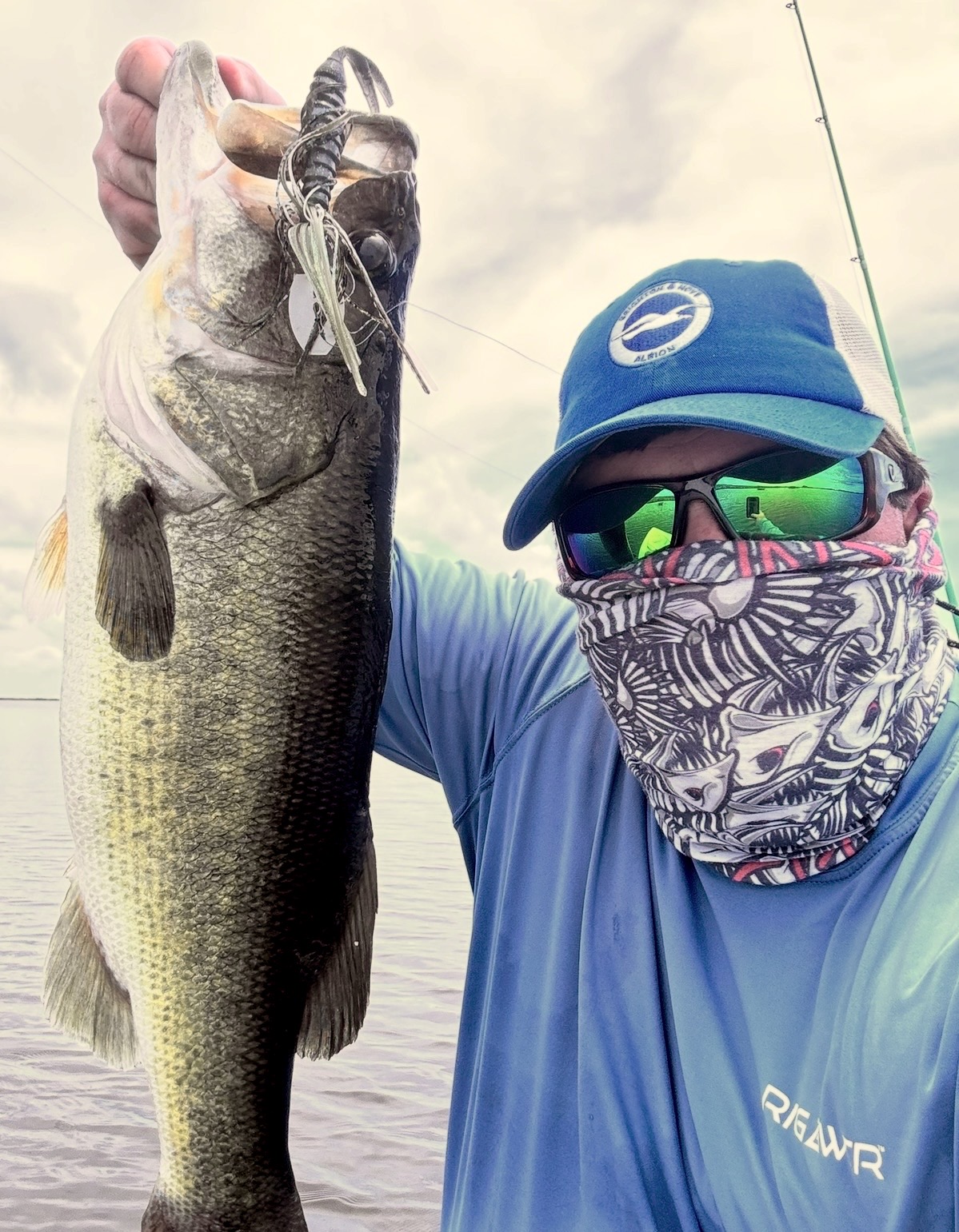
Targetting Bass After Heavy Rains
Happy Monday Spacefish!
Ok – so we’re nearly 2 weeks removed from heavy, off-the-charts rainfall and flooding. We experienced such an influx of water from above during that flood that, despite the lack of rainfall since, we will be experiencing the effects of this for a while to come. Especially in our freshwater fisheries along the St. John’s River and the Kissimmee Chain of Lakes. This year in particular, we have had some serious rainfall. Whether you’re fishing the Kissimmee Chain of Lakes, the St. Johns River, or your favorite neighborhood pond, chances are you’ve seen water conditions that look a little different than they did a few weeks ago.
Water levels rise, runoff pours into our lakes and rivers, and relatively clear areas suddenly look like somebody dumped a few hundred gallons of chocolate milk into them. For bass anglers, these conditions can be frustrating. We develop confidence in certain areas, particular presentations, and familiar patterns. When those conditions change, it’s easy to assume the fishing has gone downhill. But here’s the thing we should remember… The bass haven’t stopped eating just because the water got dirty.
They’ve simply adjusted to their changing environment. If we can understand how rainfall changes the water, where bass are likely to reposition themselves, and which presentations give us the best chance of triggering a strike, we might discover that dirty water isn’t always the disadvantage we think it is. Sometimes, it can actually work in our favor.
First, Understand What the Rain Actually Does
Before we start talking about lures, I think it’s worth spending a little time discussing what happens to our freshwater ecosystems following significant rainfall. One of the biggest misconceptions anglers have is that all brown water is created equal, but it most certainly is not. In Florida, water can become discolored for several different reasons, and understanding those differences can help us make better decisions on the water.
Suspended Sediment: The Chocolate Milk Effect
When heavy rainfall washes across roads, shorelines, agricultural areas, and other exposed surfaces, it can carry fine particles of soil, clay, and organic material into nearby waterways. These particles remain suspended in the water column, reducing visibility and creating what scientists call turbidity.
In extreme cases, bass may have difficulty visually identifying prey beyond a relatively short distance. That doesn’t mean they become helpless. Bass possess a lateral line system (all fish have them; some are just better with it than others) that allows them to detect vibrations and pressure changes in the surrounding water. However, when visibility becomes severely limited, their hunting opportunities and the effectiveness of certain presentations can change.
Tannins: Florida’s Natural Sweet Tea
Now let’s talk about something particularly relevant to the St. Johns River and many of our other Florida waterways…Not all dark water is muddy water. Much of Florida’s naturally tea-colored water gets its appearance from dissolved organic compounds, including tannins, released as leaves, vegetation, and other organic materials decompose.
Think about what happens when you drop a tea bag into a glass of water. The water changes color, but that doesn’t necessarily mean it’s filled with suspended dirt. The same principle applies to our rivers and lakes. Tannin-stained water can be relatively clear in terms of suspended particles, even though its darker color reduces light penetration. That’s an important distinction because bass living in these environments are often accustomed to naturally dark water.
Stormwater Runoff: More Than Just Mud
Heavy rainfall can also introduce fertilizers, organic debris, and other pollutants into our waterways. Increased nutrient loading can contribute to algae growth, while the decomposition of organic material can consume dissolved oxygen. That’s especially important in Florida, where warm water already holds less dissolved oxygen than cooler water. Sometimes an influx of rainwater creates favorable feeding opportunities. Other times, particularly when runoff carries oxygen-poor water or pollutants, fish may avoid the affected area. The takeaway here is simple: Don’t judge water quality by its color alone.
Applying This to the Kissimmee Chain and St. Johns River
Let’s bring this discussion a little closer to home. The Kissimmee Chain of Lakes and the St. Johns River provide two excellent examples of how rainfall can influence bass behavior in different freshwater environments.
On the Kissimmee Chain, including Lake Toho, submerged vegetation plays a major role in determining where bass position themselves. Hydrilla, eelgrass, Kissimmee grass, lily pads, and other vegetation provide habitat for baitfish and ambush opportunities for predators.
When water levels rise following heavy rainfall, bass may gain access to shallow vegetation and shoreline cover that was previously too shallow to hold fish. However, rising water doesn’t automatically mean every flooded shoreline will produce. I would focus on areas where newly accessible cover intersects with established vegetation, depth changes, or concentrations of forage. Those are the kinds of places where a bass has multiple reasons to stick around.
The St. Johns River presents a slightly different situation. Because we’re dealing with a river system, moving water becomes an especially important consideration. Rainfall can increase flow through tributaries, canals, and connecting waterways. That moving water can transport forage and create feeding opportunities around current breaks, and bass generally don’t want to spend all day fighting strong current if they can avoid it.
Instead, look for areas where they can hold behind structure, along vegetation edges, or in slower-moving water adjacent to stronger flow. Creek mouths, canal intersections, and sheltered pockets can all be worth investigating.
For anglers fishing from kayaks, these are also situations where understanding water movement can be more valuable than having the latest electronics. A little observation goes a long way. Also, please remember this: high water can also mean stronger currents, submerged hazards, and difficult launching conditions. No fish is worth taking unnecessary risks.
Three Lures for Dirty-Water Bass
Now that we’ve covered the science and where to look, let’s get to the fun part. When I’m fishing stained or muddy water, I want presentations that give bass a reasonable opportunity to locate the lure.
Sometimes that means vibration. Sometimes it means a strong silhouette. And sometimes it means slowing down and putting the bait directly in front of a fish. Here are three approaches I’d have confidence in following heavy fall rainfall.
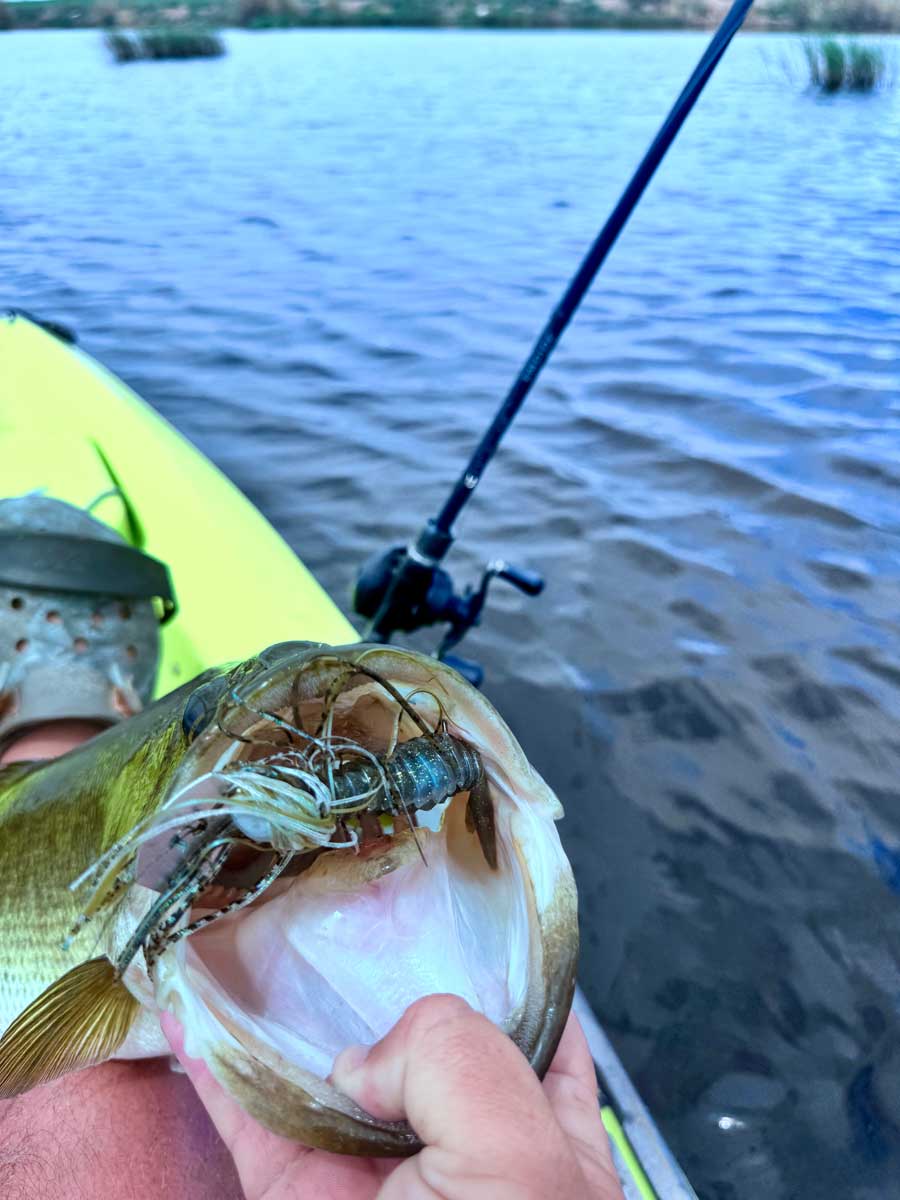
The Bladed Jig
1. Bladed Jigs
If I’m covering water and trying to locate actively feeding bass, a bladed jig is an excellent place to start. Often referred to as ChatterBaits – due to Z-Man pioneering this bait- but legally speaking, only they can use that term since it is trademarked. These lures combine the profile of a jig with a vibrating blade that creates noticeable movement through the water.
That vibration is particularly useful when visibility is limited. Bass can detect nearby water movement through their lateral line, giving them another way to locate potential prey. I like fishing bladed jigs along submerged vegetation, outside grass edges, and through those transition zones where muddy water meets clearer water.
On Lake Toho, for example, I would look for hydrilla edges with enough open water to retrieve the bait without constantly fouling the blade. A steady retrieve is usually my starting point, but occasionally slowing down or briefly changing speed can trigger a reaction strike.
For colors, black and blue can create a strong silhouette, while white or chartreuse combinations may also be effective depending on water clarity and available forage. My advice is to start with a presentation you can confidently work through the cover and let the fish tell you what they prefer.
2. Dark-Colored Worms
If there’s one thing Florida bass anglers should never underestimate, it’s the effectiveness of a soft-plastic worm. You don’t need an elaborate presentation or a tackle box full of expensive gadgets to catch bass, and sometimes a dark-colored worm is exactly what the situation calls for.
I’m particularly fond of Junebug and black-and-blue patterns when fishing stained water, and the rationale behind it is pretty straightforward. In low-light conditions, a darker lure can create a distinct silhouette against the brighter water above it, especially when viewed from below. That doesn’t mean dark colors are automatically superior in every muddy-water situation, but they provide a reliable starting point.
A Gambler Burner Worm in Junebug with a blue tail is a natural choice, and my personal favorite for working around submerged vegetation. If the fish are actively feeding, I’ll use a steady swimming retrieve to cover water.
But if the bite is slower, a Texas-rigged worm pitched/flipped and worked deliberately and carefully around vegetation, wood, or other cover can be extremely effective. This is where patience becomes important. When visibility is limited, bass may have a smaller window to identify and attack a lure. Sometimes slowing down and keeping your presentation in the strike zone makes all the difference.
Targetting Bass After Heavy Rains
3. Black Frogs
This might be my favorite option of the three, particularly when we’re talking about shallow Florida lakes with heavy vegetation. There’s something special about watching a bass explode through a mat of vegetation to destroy a topwater frog.
After heavy rainfall, those shallow vegetated areas that can provide for good froggin’ can become especially interesting. Rising water may allow bass to move farther into shoreline vegetation, while floating mats and lily pads provide overhead cover.
A black hollow-body popping frog is an excellent presentation for these conditions. The dark body creates a strong silhouette when viewed against the sky, while the popping action displaces water and creates surface disturbance.
I particularly like working frogs along the edges of lily pads, through openings in vegetation, and around pockets where bass might be waiting beneath the surface. Sometimes a steady series of pops gets the job done. Other times, allowing the frog to sit motionless for several seconds between movements can be surprisingly effective.
And when a fish finally commits, resist the temptation to immediately jerk the rod at the first splash….Give the fish a moment to get the frog before setting the hook. There are few things in bass fishing, or in life, that are more frustrating than pulling a perfectly good frog away from a hungry largemouth; ask me how I know…
The Mental Side of Fishing Dirty Water
There’s one final ingredient that I think deserves attention, and it has absolutely nothing to do with the lure tied to the end of your line, and that is confidence! As anglers, we tend to become comfortable with familiar conditions.
We know what our favorite lake looks like when the water is clear. We know which grass lines usually hold fish. We know where we’ve caught bass before. Then a week of heavy rainfall changes everything. Suddenly the water looks terrible, our favorite areas aren’t producing, and we start questioning whether we should have stayed home or gone surf fishing with Captain Crush.
But the fish don’t evaluate their environment the same way we do. They’re responding to available food, suitable habitat, water quality, and changing environmental conditions; the key to success can be our ability to recognize those changes and adapt.
Conclusion
Heavy fall rainfall can certainly make bass fishing more challenging here in Central Florida, but challenging conditions don’t necessarily mean poor fishing. Sometimes rising water opens up new habitat. Sometimes runoff creates feeding opportunities; and when it comes to lure selection, keep things simple.
A vibrating bladed jig, a dark-colored soft-plastic worm, and a black topwater frog can cover a tremendous amount of water and a variety of fishing situations.
If you’re interested in stocking up on any of the baits mentioned above, stop by Strike Zone Fishing in Melbourne. Whether you need a vibrating bladed jig to search stained water and a trailer to pair it with, or a pack of dark-colored Gambler worms to work through the grass, or a black popping frog to tempt a big Florida largemouth out of the pads, Strike Zone has you covered. They’re a great local resource for tackle, gear, and advice to help you make the most of whatever conditions Mother Nature throws our way!
Thank you for taking the time to read this report; it truly means a lot! May your week be filled with happiness and the tightest of lines. Until next time!


Leave A Comment
You must be logged in to post a comment.