
Paddling Through History - St. Augustine Edition
Happy Monday, Spacefish!
This week, we’re doing something a little different. We’re hitting the road and stepping outside our Central Florida boundaries for the first installment of a new series I plan to return to over the next few years. I’m calling it Paddling Through History, and the focus will be on fishing areas with historical significance to the state of Florida.
Part of my “real job” is teaching Florida History at Melbourne Central Catholic. I love Florida. I love fishing. And I love history. I’m excited to share those passions here on Spacefish, and I hope to provide not only entertaining and useful fishing content but maybe drop a few nuggets of Florida history along the way. So if you’re ready—let’s go!
Launch Spot & Logistics
I launched from the Lighthouse Park Boat Ramp on Salt Run. This site is located on the north side of Anastasia Island near the St. Augustine Lighthouse. From the ramp, you paddle south across Salt Run into the lagoon area in Anastasia State Park. The park charges an entrance fee unless you have a Florida State Parks Annual Pass. Parking at the Lighthouse ramp is free. There are restrooms, plenty of space, and it’s kayak friendly.
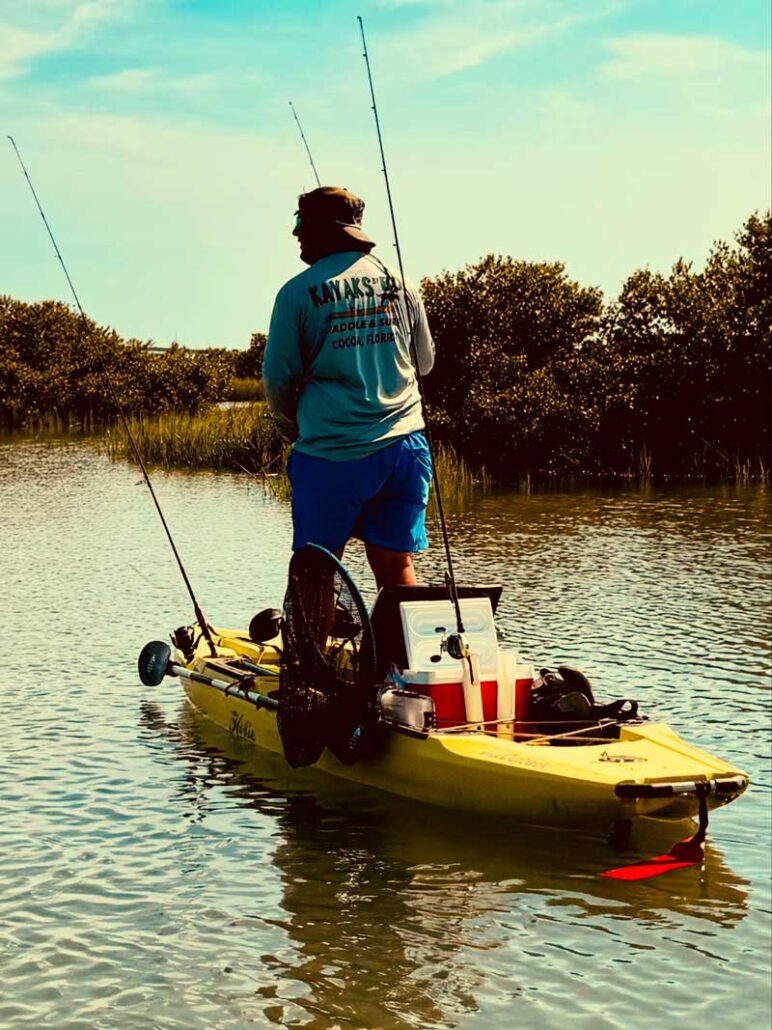
Marsh Grass Shoreline - St. Augustine
Fishing Breakdown
Leaving Melbourne at 4 a.m. put us in St. Augustine early enough for live shrimp and a Circle K breakfast before hitting the water at first light. I started the morning with a Rapala Skitterwalk, which produced a few small trout. Once the sun climbed, I switched to a White Gulp! Swimming Mullet (Curly Tail) on a ¼ oz Z-Man Trout Eye jighead in gold. That combo stayed tied on most of the day.
My wife fished live shrimp under a popping cork, and I mixed in some live shrimp too. Oddly enough, the live bait didn’t produce much—probably because there were shrimp everywhere. Combined, we pulled off the ol’ trashcan slam: jacks, ladyfish, and catfish.
The Gulp! curly tail was far more productive, especially for flounder. I really wanted a North Florida Slam—trout, redfish, and flounder—but I couldn’t connect with a red. I did catch some small trout early, and more flounder than I ever do around home. In fact, I’ve only caught one inshore flounder in the last five years in the Lagoon system, so this was a nice change.
The key to finding flounder was targeting depth changes near hard structure—rocks, docks, seawalls, or oyster beds. I got snagged a few times on oysters but never lost tackle. I fished with 10 lb braid and a 20 lb fluorocarbon leader, and while the leader occasionally got frayed, it held up well with regular checks and reties.
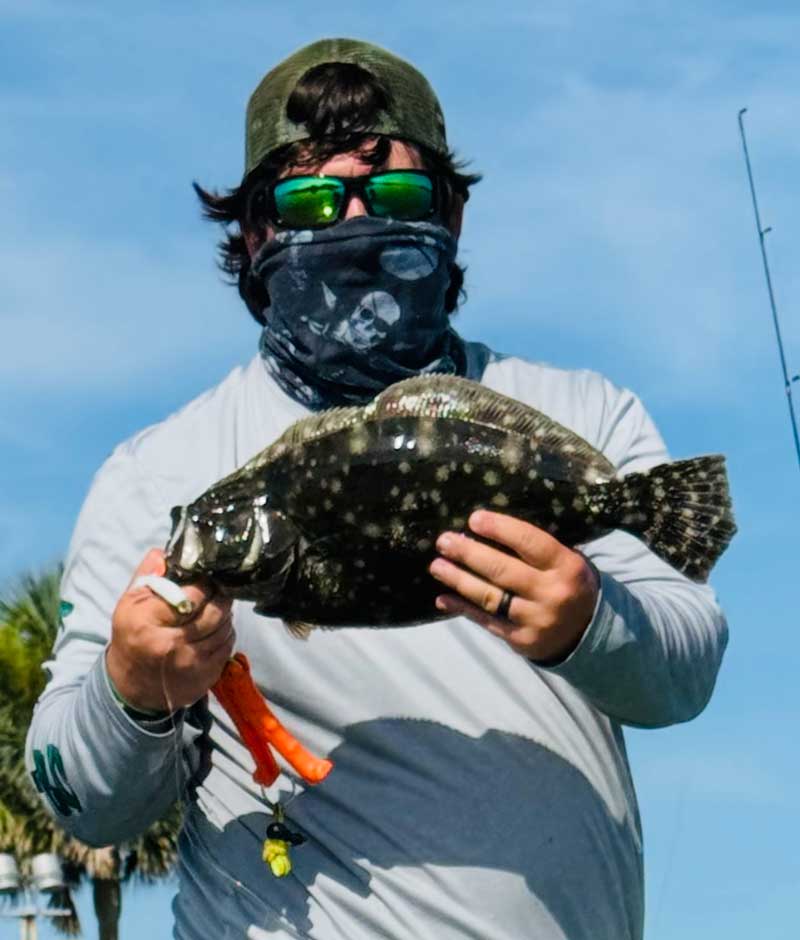
Hospital Creek - Matanzas River Flounder
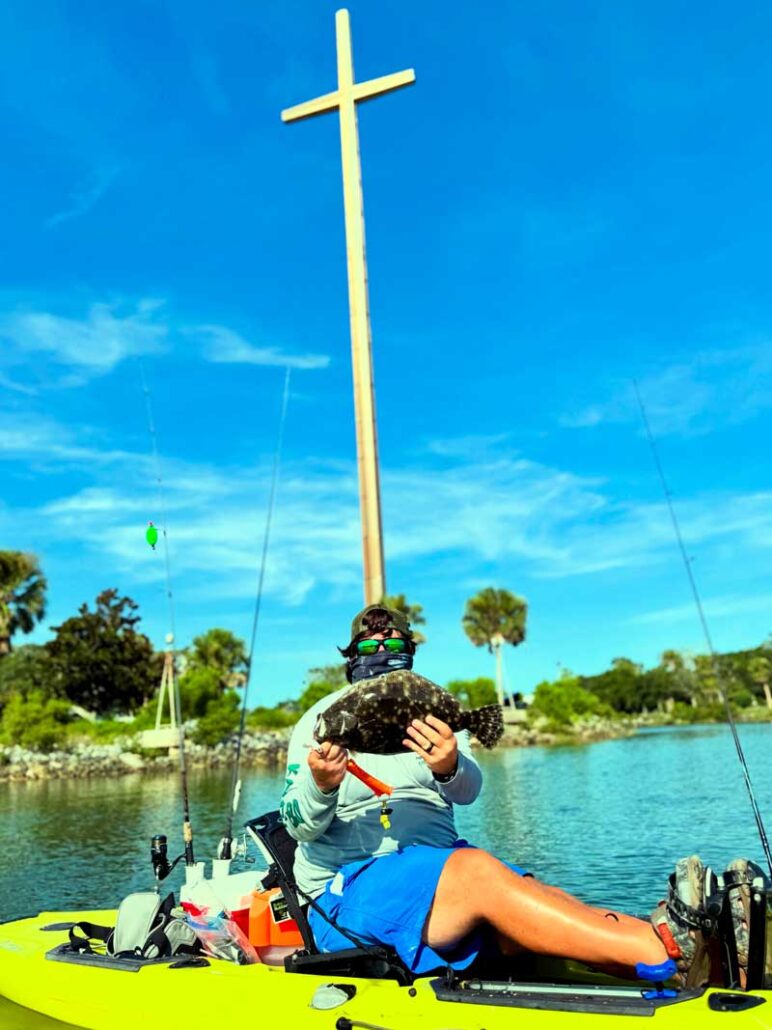
Good Fishing at “The Great Cross”
The most productive spot we fished was around The Great Cross, a towering 208-foot stainless steel cross built to commemorate St. Augustine’s 400th anniversary and the first Catholic Mass celebrated in what would become the U.S.
The Mission Nombre de Dios grounds, where Pedro Menéndez de Avilés landed in 1565, offer sweeping views of the Matanzas River and great structures for fishing. The rocky point and tidal basin near the cross produced multiple flounder and a couple of trout. Fishing in the shadow of a centuries-old Spanish mission, with the cross towering above us, was a surreal and unforgettable moment.
The cross was erected in 1966, exactly 400 years after Menéndez’s arrival, as a symbol of faith and a marker of St. Augustine’s enduring history. It’s a beautiful area, and it turned out to be just as fertile for fishing as it is for reflection.

Flounder at the Fountain of Youth
The Myth of the Fountain of Youth
Yes… I had to fish at the Fountain of Youth.
Even though the Florida History teacher in me seethes at how much credit Juan Ponce de León gets thanks to the St. Augustine tourism machine, I couldn’t resist casting off the dock. I even caught a flounder with the observation tower in the background.
The legend of the Fountain of Youth comes from a Taino Indian myth, tied to a magical spring on the island of Bimini. There’s no real evidence Ponce ever searched for it. What’s more frustrating is that while Ponce de León landed on Florida’s coast in 1513 (likely near St. Augustine), it was Pedro Menéndez de Avilés who actually founded the city in 1565, establishing the first continuously occupied European settlement in the continental U.S.
Ponce’s 1521 colonization attempt failed due to native resistance. In contrast, Menéndez successfully established St. Augustine after wiping out the French at Fort Caroline (present-day Jacksonville). So yeah… I fished there. But I did it begrudgingly.
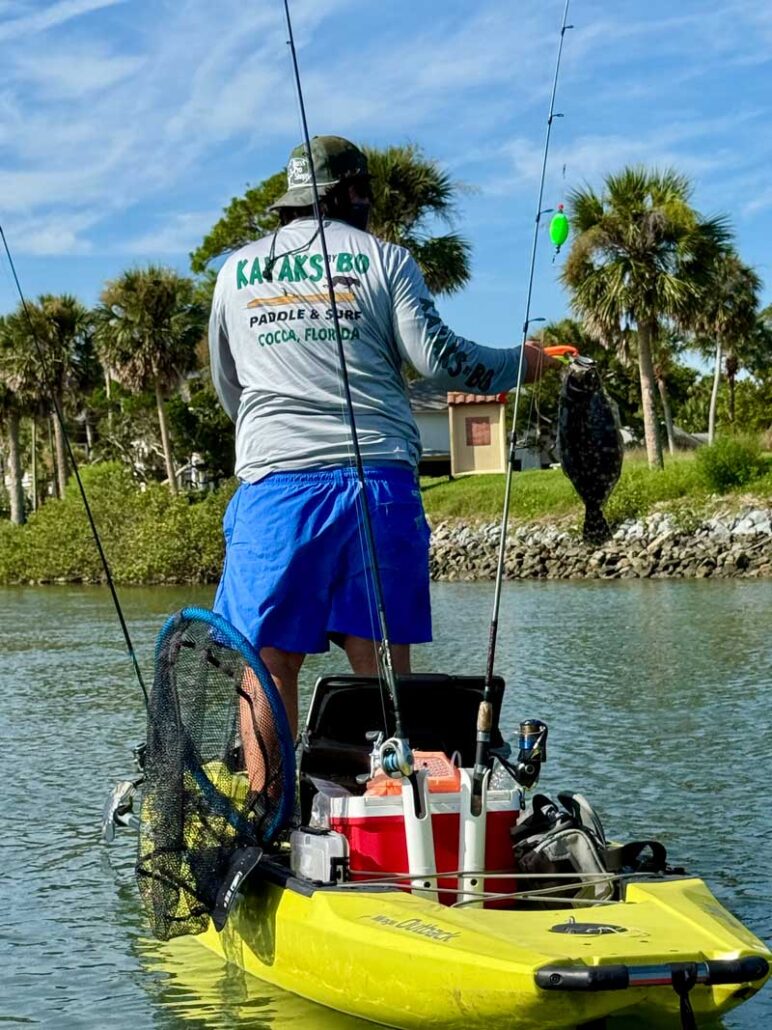
Another Flounder Near the Great Cross
The Castillo de San Marcos
Castillo de San Marcos is the oldest masonry fort in the U.S. and a designated National Monument. Built from coquina (a natural limestone shellstone) between 1672 and 1695, the fort was constructed by the Spanish to defend their claim to Florida against British and pirate attacks.
The fort features bastions, a moat, and thick coquina walls that withstood sieges in 1702, 1728, and 1740. It changed hands peacefully multiple times—becoming British in 1763, Spanish again in 1784, and finally U.S. territory in 1821.
Over the centuries, it served as a military prison and was used to hold Confederate soldiers during the Civil War. In 1924, it became a National Monument and is now run by the National Park Service. Despite numerous battles and transitions, the Castillo was never taken by force.
Nearby is the coquina quarry on Anastasia Island, where stone was cut for the fort. Its construction was prompted in part by Sir Francis Drake’s 1586 raid, during which the English privateer (a.k.a. “Drake the Dragon”) burned the original wooden settlement to the ground. The Spanish fled into the woods but returned to rebuild—this time with stone.
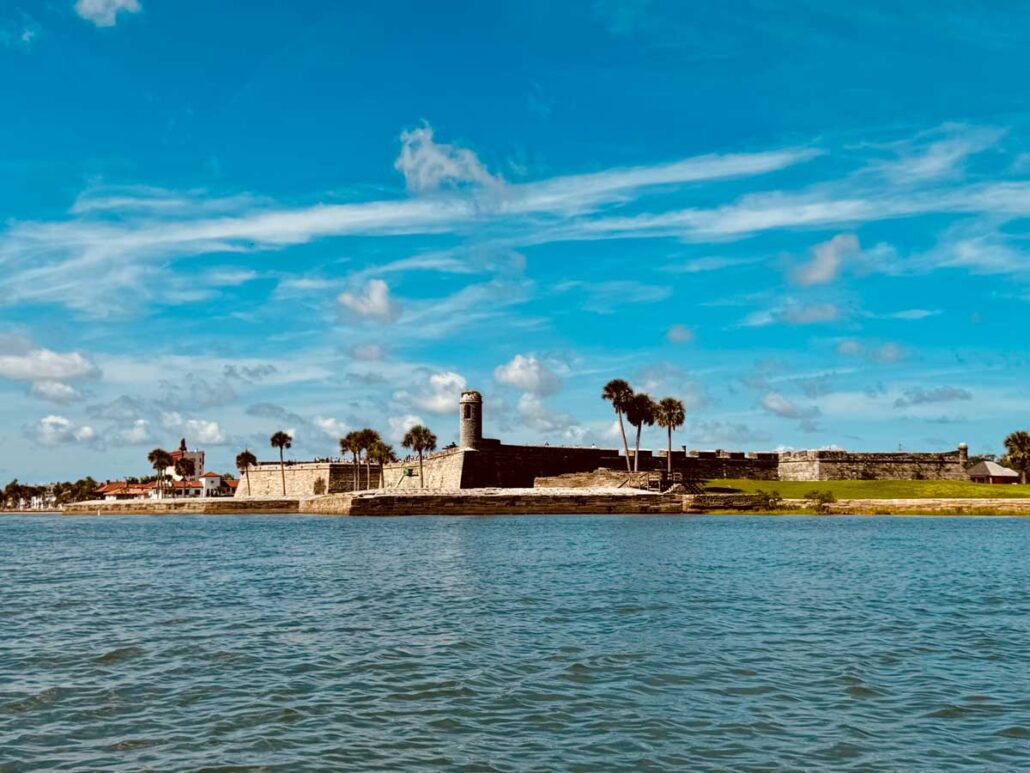
Castillo De San Marcos - On The Water View
Conclusion
Florida is full of history, and since the story of civilization has always been tied to waterways, we anglers are uniquely positioned to experience the past in ways most never consider. This trip was just the beginning of what I hope becomes a continuing “Paddling Through History” series.
Whether you’re fishing for flounder or following in the wake of conquistadors, make sure you’re geared up for the journey. Stop by Kayaks By Bo for all your kayak fishing needs. I would also like to give a special shout-out to the staff at Avid Angler, a truly awesome fishing supply store located along US Highway 1 in St. Augustine. Their local expertise and recommendation of the White Gulp! Curly tail proved invaluable for this trip! I’d also like to give a special thanks to my wife, Jessica. Not only is she an awesome fishing partner, but she is a really good photographer, and the past two weeks, I have gotten some awesome photos to supplement these reports with.
Thanks for indulging me in this report—I hope you found it enjoyable! Stay safe, stay hydrated, and go rip some lips this week. Until next time!


Leave A Comment
You must be logged in to post a comment.