

The Fall Transition
Happy Monday Spacefish!
Last week, we talked about reading the water instead of the calendar, following the food, and understanding why redfish and snook don’t necessarily make the same moves as fall arrives on the Space Coast. This week, we’re taking that understanding into the tackle box.
Finding fish is a pretty important first step, but we still have to convince them that what we’re throwing is worth eating! Before we spend twenty minutes debating lure colors, though, let’s consider how we’re presenting those baits. Sometimes the adjustment we need is in the hand holding the rod: a slower retrieve, a longer pause, or a little more time in the strike zone.
Adjusting Our Artificial Lures for Fall
Now that we’ve discussed where the fish are likely to be, let’s talk about what we’re going to throw at them. One of the most interesting lessons from the FlatsClass Youtube video (Shout out to Capt. CA Richardson) that inspired this article is the importance of lure presentation.
As anglers, we have a tendency to obsess over lure colors. We can spend twenty minutes standing in front of a tackle display debating whether we need pearl, silver glitter, smoky shad, murder mullet, space dust, or golden bream… or some recrambled nomenclature that is just a new name on a worn out colorway.
Meanwhile, we might be overlooking something much more important. How fast are we fishing? As water temperatures decline, fish may become less willing to chase a fast-moving lure, especially following a significant cold front. That doesn’t mean we need to completely abandon our favorite artificial baits. It means we need to adjust how we’re using them.
1. Paddle Tails: The Versatile Fall Workhorse

The Fall Workhorse
A three- or four-inch paddle tail is one of the most versatile artificial lures we can carry during the fall transition. Whether you’re fishing a grass flat, mangrove shoreline, creek mouth, or deeper channel edge, a paddle tail can imitate a variety of small baitfish.
For much of my shallow-water fishing, I like starting with a relatively light jighead. A 1/16- or 1/8-ounce head can be effective in shallow water, while deeper areas or stronger current may require additional weight. The goal is to maintain control without making the lure sink unnecessarily fast.
As the water cools, experiment with slowing your retrieve and keeping the bait closer to the bottom. A paddle tail moving just above a grass edge or slowly swimming through a sandy pothole can be extremely effective.
2. Topwater: Don’t Put It Away Too Early
Topwater Still Works
A three- or four-inch paddle tail is one of the most versatile artificial lures we can carry during the fall transition. Whether you’re fishing a grass flat, mangrove shoreline, creek mouth, or deeper channel edge, a paddle tail can imitate a variety of small baitfish.
For much of my shallow-water fishing, I like starting with a relatively light jighead. A 1/16- or 1/8-ounce head can be effective in shallow water, while deeper areas or stronger current may require additional weight. The goal is to maintain control without making the lure sink unnecessarily fast.
As the water cools, experiment with slowing your retrieve and keeping the bait closer to the bottom. A paddle tail moving just above a grass edge or slowly swimming through a sandy pothole can be extremely effective.
2. Topwater: Don’t Put It Away Too Early

Weedless Jerk Bait
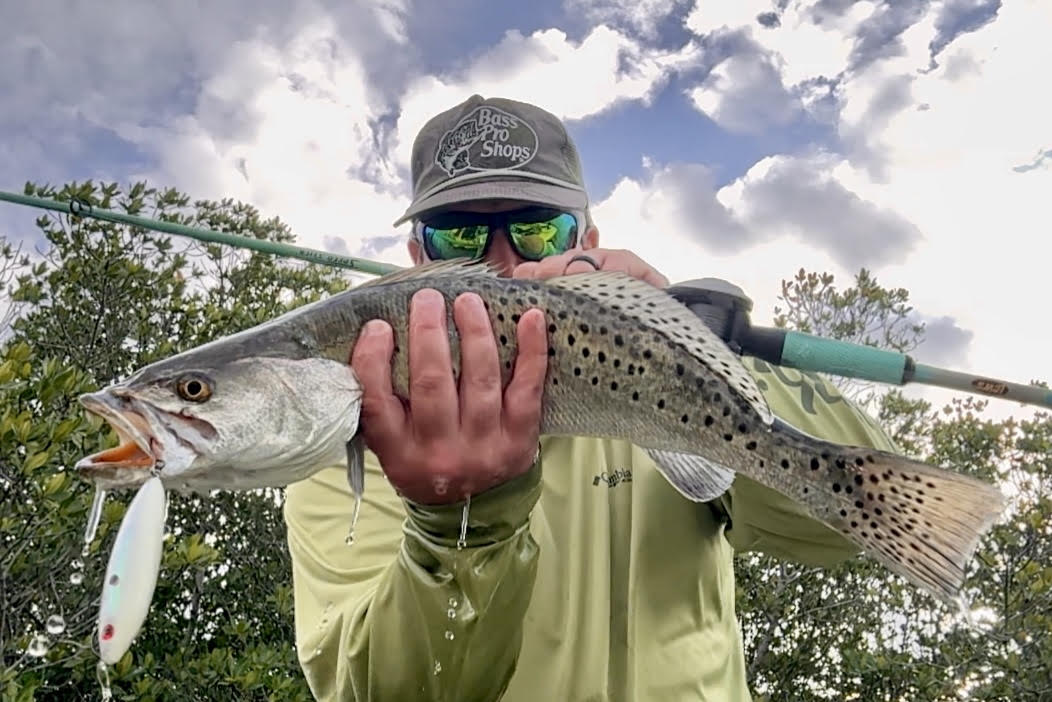
Anybody who knows me knows that I love throwing topwater plugs. There’s something special about watching a redfish, seatrout, or snook explode on a lure at the surface.
During the summer, we often associate topwater fishing with those first magical moments around sunrise. But fall can change that equation.
As water temperatures become more comfortable, surface-feeding activity can continue later into the morning, particularly under cloudy skies or before an approaching front. When fish are actively chasing bait and the surface has some chop, a more aggressive walking retrieve can help attract attention.
In calm water or heavily pressured areas, however, I prefer a more deliberate cadence. Slow things down. Allow the lure to pause occasionally. Sometimes that brief hesitation is exactly what triggers a strike.
3. Soft Plastic Jerkbaits: The Grass Flat Specialist
Weedless Jerk Bait
Soft plastic jerkbaits are another excellent option for the transition period. They can be fished near the surface, twitched through the water column, or allowed to fall naturally into sandy potholes.
More importantly, they can be rigged weedless. For anybody fishing the grass-heavy portions of the Mosquito Lagoon, that is a significant advantage. A weedless jerkbait allows us to cover areas where exposed jighead hooks might collect vegetation on every cast. As conditions cool, shorten your twitches and increase the length of your pauses.
You want the lure to resemble an injured or vulnerable baitfish rather than something desperately trying to escape at full speed.
4. Shrimp Imitations: Let the Current Work

Fall Transition - Shrimp Lures
As shrimp become a more prominent part of the seasonal forage, artificial shrimp deserve a larger role in our tackle rotation. Products like the OG Classic DOA Shrimp, the Vudu Shrimp, the Z-Man Prawn StarZ, etc – offer multiple rigging possibilities.
They can be fished on jigheads, weedless hooks, or beneath popping corks. One of the most important things to remember is that shrimp don’t spend their entire lives racing through the water. They drift, settle, and make short, sudden movements when threatened.
Our artificial presentations should reflect that behavior. A short hop followed by a longer pause can be extremely effective around creek mouths, mangrove edges, and small drains. A popping cork can also help keep the shrimp imitation above grass or shell while allowing wind and current to carry it through a productive area. As the water cools, consider reducing the number of aggressive pops and allowing the lure to drift more naturally; and don’t assume that popping corks are exclusively for trout and redfish. Snook will absolutely eat a shrimp imitation presented beneath a cork, particularly when the current carries it close to mangrove cover.
5. Suspending Twitchbaits

Snook on the DOA Shrimp
As the fall transition progresses and water temperatures become more consistently cool, there is another lure category that deserves consideration – the suspending twitchbait.
A MirrOlure MirrOdine is one of my favorite confidence baits when I want to keep a lure in the strike zone without forcing fish to chase it. A twitch-twitch-pause retrieve can be extremely effective, but the pause becomes increasingly important as water temperatures decline. The ability to suspend in front of a fish can be a major advantage.
The Most Important Adjustment: Speed Before Color
If there is one lesson I want anglers to take away from this report, it’s this… Before changing your lure color, change your retrieve speed/style/cadence/tempo. When a fish refuses a particular bait, our first instinct is often to reach into the tackle box and try another color. Sometimes that works. But during a seasonal transition, I believe we should consider three variables in a particular order:
1. Retrieve speed: Is the lure moving too quickly for the conditions?
2. Lure profile: Does the size and shape resemble the available forage?
3. Color: Does the lure provide an appropriate contrast for the water clarity and light conditions?
That doesn’t mean color is irrelevant. It simply means that the perfect color won’t accomplish much if our lure is moving too quickly, traveling through the wrong part of the water column, or missing the fish entirely. Think about a snook holding near a creek bend after a cool night.
That fish might not be interested in chasing a large, aggressively retrieved paddle tail. But a smaller lure moving slowly through the current, with a brief pause near the ambush point, might present an opportunity that’s too easy to ignore.
Final Thoughts: Fish the Water, Not the Calendar
One of the things I love most about fishing is that it constantly reminds us how much there is left to learn. Every season presents new challenges, and the fall transition is a perfect example.
The same grass flat that produced fish during the summer might remain productive for redfish while snook gradually begin moving toward deeper, more protected habitat. The same paddle tail that worked with a fast retrieve in September might require a slower presentation in November.
None of those changes happen simply because the calendar says it’s fall; they happen because the environment is changing and the fish are responding. So the next time you’re out on the Indian River Lagoon, Mosquito Lagoon, or one of our local brackish creeks, spend a little extra time observing the conditions before making your first cast.
For the techniques and tackle discussed in this week’s report, stop by Strike Zone Fishing in Melbourne. Whether you’re looking for paddle tails, suspending twitchbaits, artificial shrimp, or a popping cork and any other type of terminal tackle, they’ve got plenty of options for putting together an effective fall inshore tackle selection.
Stay safe, be happy, and may the odds be ever in your favor! Tight lines, everybody!



Leave A Comment
You must be logged in to post a comment.