
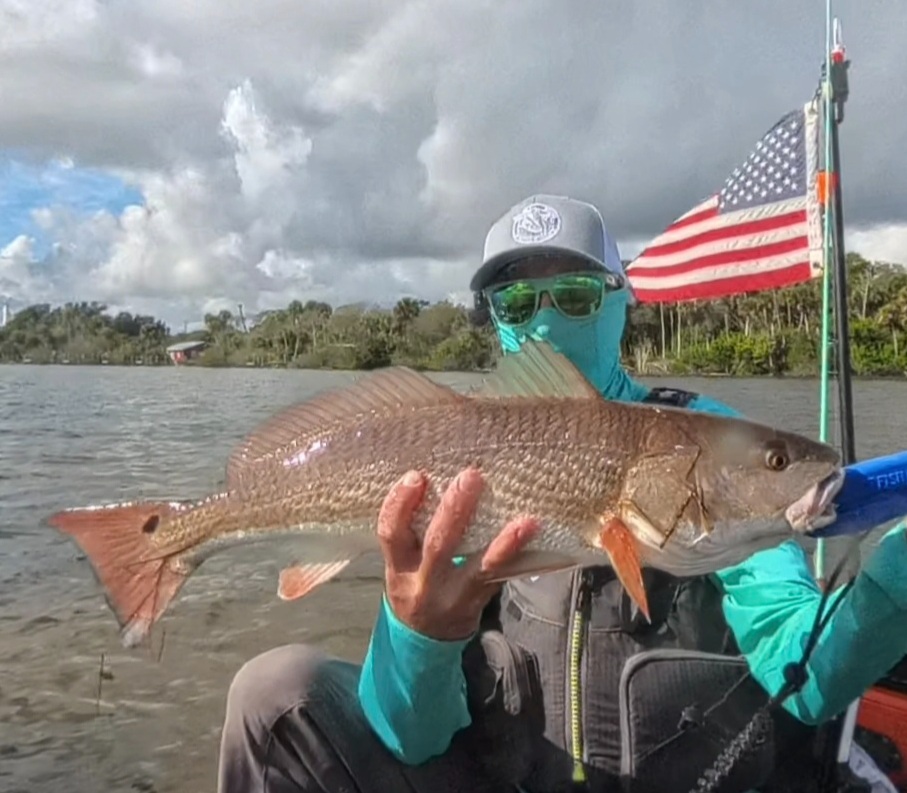
Fall Transition Underway on the Indian River Lagoon and Mosquito Lagoon
Knock, knock… who’s there? Fall fishing.
The seasonal transition is officially underway across the Space Coast, and anglers should be looking forward to some excellent inshore fishing as we move deeper into fall, particularly for redfish, spotted seatrout and, soon, black drum.
We have already had a few noticeably cooler mornings, including one recent start around 61 degrees. That was cool enough to make me reach for the fishing jacket before heading out. But don’t put the shorts away just yet. The transition is still very much underway. Once the sun comes up, temperatures are quickly climbing back into the low 80s, and the familiar afternoon thunderstorms continue to make their appearance.
Find the Bait, Find the Fish
Fishing around the Merritt Island National Wildlife Refuge has been producing some good opportunities, while the Mosquito Lagoon side has been somewhat slower at times.
The biggest lesson from this week’s trips, however, has been a familiar one:
Find the bait and you will often find the fish.
There is always a chance of catching a fish by randomly covering water, but this week the difference was noticeable. Redfish and trout encountered away from bait schools were extremely spooky and difficult to approach. Several fish would scatter before I could even get a presentation in front of them.
After enough frustration, I changed tactics.
Instead of continuing to search randomly, I started concentrating on locating bait.
Sometimes finding bait is easy. Other times, you have to work for it. Birds, dolphins, boats working cast nets, surface disturbances and jumping baitfish can all provide clues.
One of my favorite methods is watching birds as they fly across the lagoon. Don’t just watch the birds themselves. Watch the water underneath them.
As birds pass over a school of mullet or other baitfish, the bait may become startled and erupt across the surface. Those small disturbances can reveal a concentration of bait that might otherwise be almost impossible to locate.
Once you find the bait, match the hatch.
That doesn’t necessarily mean you need to use the exact baitfish. Pay close attention to the size and profile of the forage. In many situations, I believe matching the bait’s profile and size is more important than trying to perfectly match its color.
I tend to keep lure colors simple, generally working with light or dark presentations.
Fish the Edges
Once you locate a bait school, don’t simply cast randomly through open water.
Work the edges of the bait and pay close attention to any signs of disturbance.
You may see individual baitfish suddenly jumping or scattering. Sometimes that is simply natural behavior, but other times there is a predator underneath them.
When I see bait suddenly erupt, that’s where I want my next cast to go.
One question I used to ask myself was, Why would a predator eat my lure when there are thousands of real baitfish swimming around?
The answer is opportunity.
Predators don’t necessarily need another baitfish. They’re looking for an easy meal.
Predatory fish will often follow bait schools and hold along the edges, waiting for an injured, stunned, separated or otherwise vulnerable baitfish to become available.
That’s where your presentation becomes important.
With live bait, this happens naturally. A hooked baitfish already behaves differently from the rest of the school, making it stand out.
With artificial lures, I try to create that same opportunity. A couple of pops followed by a good pause can make a paddle-tail, fluke or other soft plastic appear separated from the school and vulnerable.
Sometimes that pause is when the bite comes.
This Week on the Lagoon
This week’s fishing video was essentially a real-world demonstration of that strategy.
I made the mistake on two separate trips of leaving productive bait schools to explore other areas. Both times, the fishing became slower and more frustrating, with spooky fish that simply weren’t interested.
Eventually, I made the decision to go back to the bait.
Once I relocated the schools and stayed with them quietly, the fishing changed.
The trout bite became steady, and some very healthy redfish were working the edges of the bait.
That’s also where you can run into some of the Space Coast’s larger predators. Jack crevalle, snook, tarpon and other predatory species will occasionally move into bait schools to feed, creating opportunities beyond the redfish and trout you’re targeting.
Spotted Seatrout
The Indian River side of the Merritt Island National Wildlife Refuge continues to produce a solid spotted seatrout bite.
Most of the trout I’ve encountered recently have been in the low-to-mid 20-inch range, with fish appearing thick, healthy and in excellent condition.
The key has again been locating concentrations of bait and approaching them carefully. When trout are actively feeding around bait, they can provide consistent action, but when they’re encountered randomly away from forage, they can become much more difficult to approach.
Redfish
The redfish have also been looking extremely healthy.
I’ve been seeing and catching plenty of fish in the mid-20s through lower 30-inch range, with some very thick fish mixed in.
I haven’t encountered any particularly large schools this week. Most of the groups I’ve seen have consisted of only three or four fish.
One encounter, however, definitely got my attention.
A group of four redfish, all in the mid-to-upper 30-inch range, cruised right past me.
Let’s just say my heart rate went up a little. 😆
Those are the encounters that keep you staring at the water long after the fish disappear.
Black Drum
I haven’t personally encountered any black drum during the past week.
There have been reports of a few being caught, although the fish reported so far have generally been on the smaller side.
As we move farther into fall, I’m expecting black drum activity and sightings to continue increasing.
Tarpon Still Around
Tarpon are still being seen throughout the canals, bridges and culvert areas.
They’re definitely still around, and once again, bait appears to be one of the best clues for locating them.
I’ve had multiple tarpon make brief stops at bait schools I was drifting near. They would move in, make several runs through the school, pick off a few baitfish and then disappear.
Those encounters can happen quickly, so staying alert around active bait can pay off.
Lures Producing This Week
I had most of my success this week using two primary presentations:
Salt Strong Wake Mullet
and
4-5 inch fluke-style soft plastics, particularly Houdini or white-colored presentations, rigged on a Hoss Helix Screw Lock weighted weedless hook in the 3/0 to 4/0 range.
Both presentations allowed me to work around the bait schools while maintaining a natural-looking profile.
The Takeaway
If there is one thing I would emphasize heading into this fall transition, it’s simple:
Find the bait. Find the fish.
Don’t be afraid to change your game plan if the fish you’re seeing are spooky and unwilling to cooperate. Sometimes the answer isn’t a different lure or a different color. Sometimes you simply aren’t around the right forage.
Look for birds.
Watch for bait breaking the surface.
Pay attention to dolphins.
Watch where other anglers are throwing cast nets.
And once you find a productive bait school, don’t immediately leave it just because you want to see what else is around.
Stay with it.
Fish the edges.
Watch for predators pushing bait.
And be ready for that one cast when something big decides your lure looks easier to eat than everything else swimming around it.
Fall is coming, and the Space Coast inshore bite is transitioning with it.
Good luck to everyone heading out this week. Take care of the lagoon, pick up after yourself and, whenever possible, pack out more than you pack in.
Tight lines, everyone.
Get Thumped.


Leave A Comment
You must be logged in to post a comment.